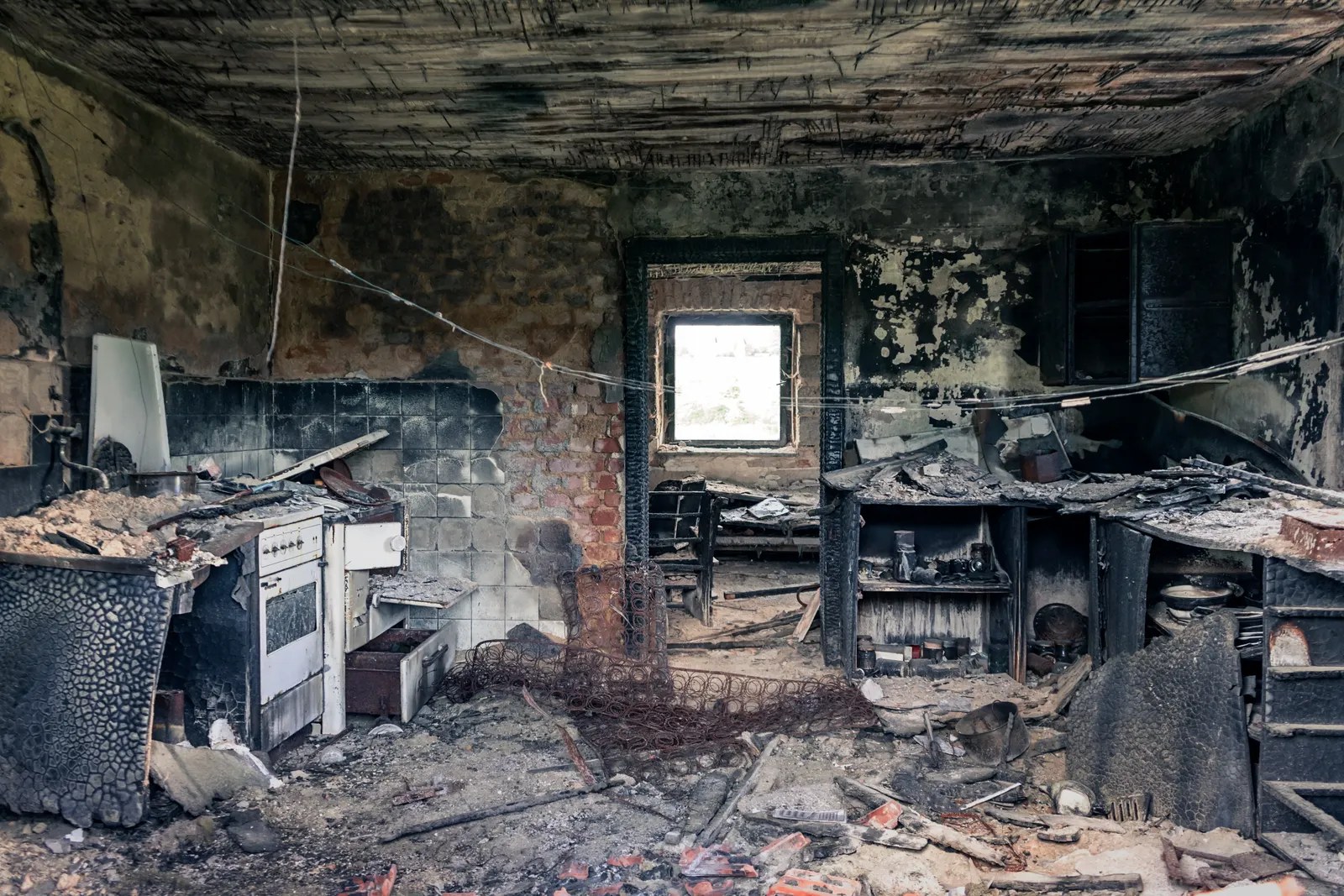
Fire Damage Restoration in Fort Myers, FL
A house fire leaves three kinds of damage: what burned, what the smoke reached, and what the firefighting water soaked. Call to connect with a local provider who assesses all three, cleans up the soot and smoke, dries the water, and repairs what was damaged.
Once the phone line is live, you'll be connected with a local restoration provider — please stay on the line.
What to Do After a Fire- Water, fire & mold restoration
- Fort Myers, Naples & nearby areas
- Assessment first, then a clear plan
Fire Damage Is More Than What Burned
Fire damage restoration in Fort Myers covers flames, smoke and soot, and the water used to fight the fire. Smoke travels through attics, wall cavities, ceilings, and the HVAC system — so rooms the fire never reached can still need cleaning, and the smell can linger for months if the soot is not removed properly. Fort Myers Water Damage Pros connects callers with local providers for fire damage restoration in Fort Myers and the nearby areas.
Fort Myers sees its share of house fires: kitchen fires, electrical fires, and fires that start in garages or on lanais. Lee County gets about 54 inches of rain a year and 271 sunny days — dry, hot stretches where a small fire spreads fast. Whatever started it, the work after is the same: assess, clean up, dry, deodorize, and rebuild.
Services Available
Damage Assessment
Visible damage is only part of the picture. Assessment maps smoke and soot distribution, odours, damaged assemblies, contents, and HVAC paths — including rooms that look untouched.
Site Cleanup: Debris & Soot
Debris is removed and soot is cleaned with dry methods first. Soot is acidic and etches metal and glass within days, so it should not sit — and it should never be wiped with a wet cloth first, which smears it into surfaces.
Temporary Protection: Board-Up & Roof Tarping
Broken windows and doors are boarded up and damaged roofs are tarped so the next rain does not add water damage to the fire damage.
Smoke & Soot Removal
Soot is removed from walls, ceilings, and contents with chemical sponges and HEPA vacuuming before any wet cleaning. Wet cleaning first drives soot deeper into porous materials.
Odor Removal
Smoke odor lives in the materials. Real odor removal means removing the source, cleaning, and then treating the remaining odor — with duct cleaning and sealing where the smoke travelled through the HVAC system. Air fresheners and candles only mask it. Smoke smell comes back on humid days if the source is still in the materials.
Contents & Item Restoration
Belongings are inventoried, cleaned, deodorized, and packed out where needed, so cleaning and repairs can happen in the empty rooms. Some items can be saved; porous items that absorbed heavy smoke often cannot.
Carpet & Textile Restoration
Carpets, rugs, curtains, and upholstery hold smoke. What can be cleaned is cleaned; what absorbed too much smoke or water is removed.
Water Extraction & Drying After Firefighting
Firefighting water is a water damage job inside the fire job. It is extracted and the structure is dried the same way as any water loss — see the water damage restoration page for the process and drying times.
Reconstruction & Repairs
Damaged drywall, flooring, trim, and finishes are repaired and rebuilt once cleanup and drying are verified.
What to Do After a Fire
- Safety first. Do not re-enter until the fire department clears the house.
- Document everything. Photograph and video every room before moving or discarding anything.
- Contact the insurer and start a file of receipts in the first 24 hours.
- Call for an assessment before cleanup starts, so the scope is recorded.
- Keep a list of damaged items, with photos, for the claim.
What NOT to Do After a Fire
- Do not enter the house until it is declared safe.
- Do not wipe soot off walls or contents — it smears and drives deeper.
- Do not turn on utilities or appliances until they have been checked.
- Do not use damaged furniture, carpet, or food that was in the house.
- Do not run the HVAC system — it spreads soot and smoke residue through the house.
Fire damage in one room is rarely one room of work. Smoke reached through the attic, the wall cavities, and the ducts decides the real scope — which is why the assessment comes before any promise about time or cost.
Insurance & Documentation
Fire damage, including smoke damage and the water used to fight the fire, is usually covered by homeowners insurance — but coverage depends on the policy. What supports the claim is documentation: the assessment, photos and video taken before cleanup, an inventory of damaged contents, and records of the drying and cleaning work. That is why documentation comes first, before anything is moved or thrown away.
For the areas served, see Fort Myers, Naples, and all locations. If the fire also caused water damage, see water damage restoration. The homepage explains how the referral service connects callers with local providers.
Frequently Asked Questions
What should I do first after a house fire?
Safety first: do not re-enter until the fire department clears the house. Then document everything — photograph and video every room before moving or discarding anything — and contact the insurer. Start a file of receipts in the first 24 hours. Then call for a damage assessment.
Why won't the smoke smell go away?
Smoke lives in the materials — drywall, wood, fabric, insulation, and the HVAC system — and it returns on humid days and when the heat runs. Candles, vinegar, and air fresheners only mask it, and painting over soot traps it. The smell goes away when the source is removed: soot cleaned off before any wet cleaning, then odor treatment, duct cleaning, and sealing.
Can belongings be saved after a fire?
It depends on the damage type: burned, smoke-reached, or wet from firefighting. Hard surfaces and many contents can often be cleaned; porous materials that absorbed smoke or water often cannot. Soot is acidic and etches metal and glass within days, so assessment should not wait.
How is smoke removed after a fire?
Smoke is removed in steps matched to the residue and the material: dry cleaning with chemical sponges and HEPA vacuuming first, then wet cleaning where the material allows it. HVAC pathways are checked, because smoke travels through ducts. Odor treatment comes after the source is removed — not before.
How long does fire damage restoration take?
It depends on scope — a small kitchen fire and a whole-house fire are different jobs. Assessment, cleanup, drying, odor removal, and repairs each take their turn, and no honest timeline can be promised before the assessment.
Does insurance cover fire damage restoration?
Fire damage is usually covered by homeowners insurance, including smoke and the water used to fight the fire — but coverage depends on the policy. Documentation from the assessment and the cleanup is what supports the claim.
Is it safe to enter the house after a fire?
Not until the fire department says so. After that, some areas may still be unstable, and soot and smoke residue are not safe to handle without protection. Do not turn on utilities or appliances until they have been checked.
Start With an Assessment
Call and describe what happened, where it happened, and when it was first noticed. A local provider assesses first, then lays out the next steps clearly — no guesswork, no pressure. Local restoration pros typically offer free estimates.
Once the phone line is live, you'll be connected with a local restoration provider — please stay on the line.